Source lng micro tube for Pipeline, Medical, and Chemical Uses
Compare 30 listings for lng micro tube options including stainless steel and plastic variants. Evaluate specifications like OD, wall thickness, and customization for pipeline, medical, and industrial applications. Review technical details such as cold drawn techniques and seamless types to find the right fit for your specific project requirements and ensure quality standards are met.
Key considerations
Products List




Comprehensive Sourcing Guide
LNG Micro Tube Sourcing Guide
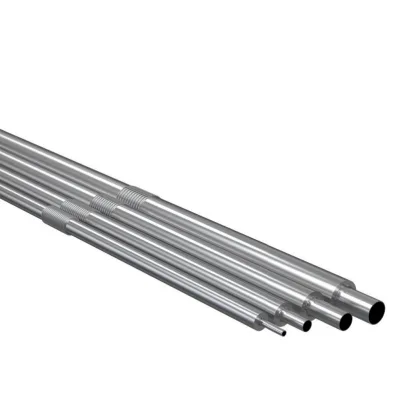
The term "LNG micro tube" often appears in procurement contexts where buyers seek ultra-fine tubing for specialized fluid handling, though the supplied data primarily reflects stainless steel and plastic micro-tubing for medical and industrial sectors. Buyers must distinguish between cryogenic liquid natural gas applications and the observed medical-grade vacuum blood collection tubes or general-purpose stainless steel pipes listed in the catalog. The observed product range includes seamless stainless steel tubes with outside diameters from 0.2 mm to 10 mm, alongside plastic micro blood collection tubes with volumes as small as 0.5 ml.
Procurement strategies should focus on verifying the specific material composition required for the intended fluid transport, as the observed listings include both stainless steel and plastic variants. While the data confirms availability of cold-drawn seamless stainless steel tubes suitable for machinery and chemical industries, it does not explicitly validate cryogenic performance for LNG. Buyers should treat the observed specifications as a baseline for general micro-tubing and request specific cryogenic testing data if the application involves liquid natural gas transport rather than standard hydraulic or food-grade fluid handling.
Product Scope and Observed Listing Signals
The observed product scope reveals a diverse array of micro-tubing solutions, ranging from industrial stainless steel pipes to medical vacuum blood collection tubes. Listings indicate seamless stainless steel tubes with outside diameters as small as 0.2 mm and wall thicknesses down to 0.02 mm, suitable for precision machinery and chemical industries. Additionally, plastic micro blood collection tubes are available in various colors and volumes, featuring additives like K2/K3EDTA and clot activators, which highlights the breadth of the supplier's catalog beyond simple fluid transport.
Buyers must carefully map their specific application needs against these observed signals to avoid purchasing mismatched materials. The presence of products with "Without Ethylene Oxide Sterilization" or "Gamma Sterile" options suggests that medical-grade requirements vary significantly within the same supplier pool. For industrial applications, the observed cold-drawn technique and round section shape are critical, whereas medical applications require strict adherence to additive compatibility and sterile packaging standards.
Technical Specifications to Verify
Technical verification must begin with the precise dimensional tolerances, as the observed data lists outside diameters ranging from 0.2 mm to 10 mm with tolerances between ±0.005 mm and ±0.05 mm. Buyers should confirm that the specific batch meets these tight tolerances, especially for applications requiring high-precision flow control or fitting into micro-machinery. The observed wall thickness ranges from 0.02 mm to 2.00 mm, and verifying the actual wall consistency is essential to prevent leaks or structural failure under pressure.
Length and form factor are equally critical, with observed options including lengths up to 12 meters for straight pipes and coil lengths up to 500 meters. Buyers must specify whether they require cut-to-length pieces or continuous coils, as the observed "According The Client Request" length option implies flexibility that must be clearly defined in the purchase order. Additionally, the observed product models like YM-KM003 and YM-KM005 indicate that specific internal geometries or volume capacities may differ, necessitating a review of the exact model number against the intended use case.
Compliance and Safety Documentation
Compliance verification is paramount when dealing with materials that may contact food, beverages, or human blood, as the observed listings include products with ISO and CE certifications. Buyers should request current certification documents to ensure the stainless steel or plastic materials meet international safety standards for their specific industry, such as food-grade or medical-grade requirements. The observed "Two Years" quality guarantee period suggests a commitment to durability, but this must be backed by valid, up-to-date certification records for the specific production batch.
Safety documentation must also address sterilization methods, as the observed data distinguishes between non-sterile, gamma-sterile, and ethylene oxide-free options. For medical applications involving blood collection, the presence of specific additives like lithium heparin or clot activators requires validation that these chemicals are compliant with local regulatory bodies. Buyers should ensure that the supplier provides a Certificate of Analysis (CoA) detailing the chemical composition and sterility status to mitigate risks associated with contamination or adverse reactions.
Cost Drivers and Commercial Terms
Cost drivers for micro-tubing are heavily influenced by the material type, with stainless steel and specialized plastics commanding different price points based on raw material volatility and processing complexity. The observed price range of 0 to 5,000,000 USD suggests a wide variance depending on volume, material grade, and customization requirements. Buyers should anticipate that ultra-fine diameters, such as the observed 0.2 mm options, may incur higher costs due to the precision required in the cold-drawn manufacturing process.
Commercial terms must account for the observed minimum order quantities (MOQ) ranging from 1 to 100,000 units, which can significantly impact unit pricing and inventory management. Packaging variations, such as plywood cases, boxes, or bulk cartons containing 10,000 pieces, also affect logistics costs and storage requirements. Buyers should negotiate clear terms regarding lead times and shipping, as the observed origin in China and Zhejiang province may introduce variable transit times depending on the final destination and current global supply chain conditions.
Supplier Qualification and Quality Control
Supplier qualification should prioritize manufacturers with proven experience in producing seamless tubes and medical-grade micro-tubes, as evidenced by the observed ISO and CE certifications. Buyers must verify the supplier's quality control protocols, specifically their ability to maintain the tight tolerances of ±0.005 mm to ±0.05 mm observed in the product data. A robust quality management system is essential to ensure that every batch of stainless steel or plastic tubing meets the specified dimensional and material standards without deviation.
Quality control checks should extend to the packaging and labeling processes, as the observed listings include specific packing formats like 100 pieces per tray or 22 bags per carton. Buyers should request a sample batch to verify that the physical product matches the described specifications, including the round shape, color consistency, and additive accuracy for medical tubes. Establishing a clear communication channel for quality disputes is crucial, given the "Two Years" quality guarantee period, to ensure prompt resolution if any defects arise during the warranty term.
Long-Term Procurement Checks
Long-term procurement success relies on establishing a consistent supply chain for materials that may require specialized handling or specific certifications over time. Buyers should conduct periodic audits of the supplier's production capabilities to ensure they can consistently deliver the observed specifications, such as the 0.2 mm to 10 mm diameter range and the various additive options for medical tubes. Regular reviews of the supplier's certification status are necessary to maintain compliance with evolving international standards and regulatory requirements.
Performance monitoring should include tracking the supplier's adherence to lead times and the consistency of product quality across multiple orders. Buyers should maintain a record of test results and performance data for each batch received to identify any trends in quality degradation or specification drift. By maintaining a proactive relationship with the supplier, buyers can ensure that the long-term supply of micro-tubing remains reliable, cost-effective, and aligned with the specific technical and safety requirements of their operations.
FAQs
How can I verify the outside diameter accuracy of an lng micro tube before ordering?
Request the stated outside diameter range and tolerance from each supplier in writing. Listed capability covers outside diameters from 0.2 mm to 10 mm with tolerances between ±0.005 mm and ±0.05 mm, so ask which tolerance band applies to your size. Confirm the measurement method and request sample pieces for verification before committing to production volumes.
What wall thickness options are available for lng micro tube products?
Suppliers list wall thickness capability from 0.02 mm to 1.50 mm on one specification and 0.05 mm to 2.00 mm on another, so the available band depends on the exact product configuration. Confirm the required wall thickness against the matching outside diameter and inside diameter ranges. Ask for a dimensional datasheet tied to your specific tube size.
Which stainless steel lng micro tube specifications suit pipeline and machinery applications?
Cold drawn seamless stainless steel tubes are listed for pipeline transport, machinery, mining, chemical, oil and gas drilling, construction, boiler, hydraulic, automotive, and food-grade uses. For lng micro tube selection, match the outside diameter, wall thickness, and length to the application, since listed lengths run up to 12 meters or coil lengths up to 500 meters.
Can lng micro tube orders be customized in size, length, and packaging?
Yes, customization is listed as available. Buyers can specify outside diameter within the 0.2 mm to 10 mm range, wall thickness, and length according to their request, with lengths up to 12 meters or coil lengths up to 500 meters. Plywood case packing is listed for tube products, so confirm your preferred packing format when requesting a quotation.
How should I compare quotations for lng micro tube purchases?
Compare quotations using outside diameter, wall thickness, tolerance band, material, and technique, since cold drawn seamless tubes vary in precision. Ask each supplier to state lead time, minimum order quantity, packing method such as plywood case, and quality guarantee period, which is listed as two years. Normalizing these terms makes pricing differences meaningful and comparable.
What is the typical quality guarantee period for an lng micro tube order?
Listed quality guarantee periods run for two years, so treat this as a baseline when evaluating offers. Confirm in writing whether the guarantee covers material defects, dimensional compliance, and surface quality. For critical applications, request inspection documentation for each batch and clarify storage conditions, since guarantee terms often depend on proper handling after delivery.